
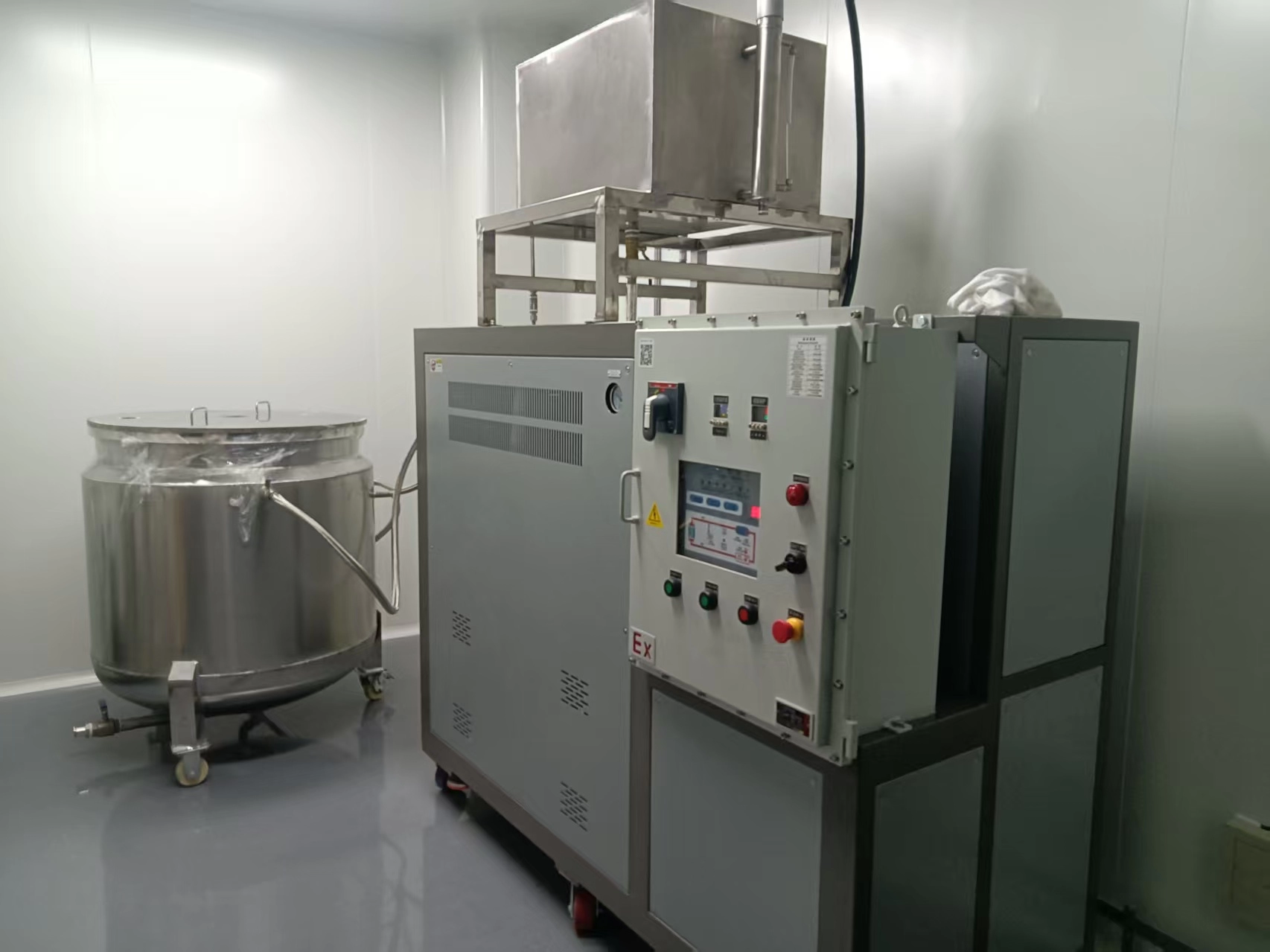
I. Components
A typical mold temperature machine usually consists of the following main components:
. Heating part: Responsible for converting electrical or gas thermal energy into thermal energy to heat the medium (such as heat transfer oil or water). The heating elements (such as electric heating tubes) are immersed in the heat transfer oil and heat up when powered on, raising the temperature of the heat transfer oil.
. Cooling part: Composed mainly of a cooling water tank and a circulation pump. When the mold needs to be cooled, the cooling water enters the cooling water tank through pipes, absorbs the heat from the heat transfer oil, and then is sent back to the mold through the circulation pump for secondary cooling.
. Circulation system: Includes a circulation pump and heat transfer oil circulation pipes. The circulation pump drives the heat transfer oil to circulate between the mold and the mold temperature machine, achieving heating and cooling of the mold. The heat transfer oil circulation pipes connect the mold temperature machine and the mold to ensure the smooth flow of the heat transfer oil.
. Control system: The core brain of the mold temperature machine, responsible for the operation and control of the entire mold temperature machine. The control system consists of temperature sensors, controllers, and actuators. The temperature sensor monitors the temperature of the mold and transmits the temperature signal to the controller; the controller, based on the preset temperature value and the difference between the actual temperature value and the preset value, controls the operation of the heating elements and the circulation pump; the actuator then controls the power output of the heating elements and the switch of the circulation pump according to the instructions of the controller.
II. Working Principle
The working principle of the mold temperature machine can be summarized as the following steps:
. Heating process: The mold temperature machine first heats the heat transfer oil through the heating part. The heating elements (such as electric heating tubes) heat up after being powered on, converting electrical energy into thermal energy and transferring it to the heat transfer oil, raising its temperature.
. Circulation process: The heated heat transfer oil is transported to the mold through the circulation pump and the heat transfer oil circulation pipes. The heat transfer oil heats the mold. After absorbing heat in the mold, the temperature of the heat transfer oil decreases, and it flows back to the mold temperature machine for secondary heating.
. Cooling process: When the mold temperature reaches the preset value, the control system will stop heating in the heating part and start the cooling part to cool the heat transfer oil. The cooling water enters the cooling water tank through pipes, absorbs the heat from the heat transfer oil, and then is sent back to the mold through the circulation pump for secondary cooling.
. Temperature control: Throughout the process, the control system monitors the temperature of the mold in real time through the temperature sensor and adjusts the operation status of the heating elements and the circulation pump according to the difference between the preset temperature value and the actual temperature value to achieve precise control of the mold temperature.
III. Advanced Functions
In addition to the basic heating and cooling functions, modern mold temperature machines also have various advanced functions, such as multi-point temperature control, rapid temperature rise and drop, and complex program control. These functions make the mold temperature machine more widely and flexibly applicable in industries such as plastic injection molding, enabling more precise temperature control according to different production requirements.
NEWS