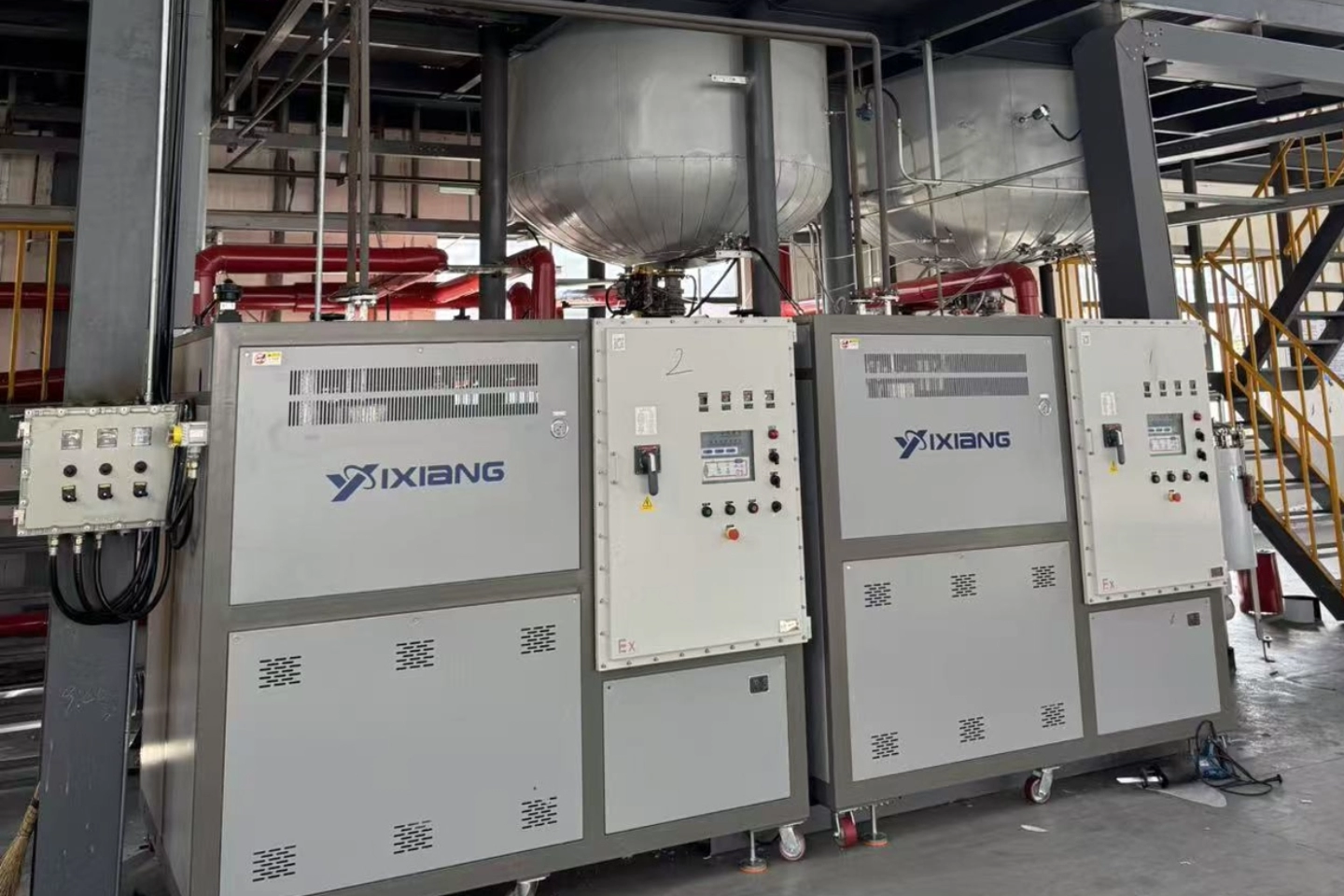
The working principle of the die casting-specific oil temperature machine is based on the closed-loop circulation of heat transfer oil, focusing on solving the problem of uniform temperature control of die casting molds, and its whole working process is closely combined with the die casting process, which can be divided into four key steps:
1. Oil Extraction and Circulation: The circulating pump (usually an imported magnetic pump for die casting scenarios, with zero leakage static seal structure) extracts the heat transfer oil from the oil storage tank and sends it to the heating system through the pipeline. The circulating pump ensures the uniform flow of the heat transfer oil, avoids local overheating or uneven temperature distribution of the mold, and ensures that the heat is evenly transferred to each part of the mold, especially for large integrated die casting molds.
2. Heating Process: The heating system (electric heating tube specially treated for die casting) heats the heat transfer oil. The heating tube is specially processed for the frequent high and low temperature conversion scenario of die casting, and its service life is 30% longer than that of ordinary heating tubes, which can withstand high temperatures above 350℃. The power of the heating system is determined according to the size of the die casting mold and the heating speed requirement, and the reasonable selection of power can balance the heating efficiency and energy consumption.
3. Temperature Monitoring and Adjustment: The temperature control system (equipped with PT100 platinum resistance sensor and PID intelligent controller) monitors the temperature of the heat transfer oil and the mold in real time. Once the temperature deviates from the set value, the system will automatically adjust the heating power to ensure that the temperature fluctuation is within the required range. For die casting processes such as aluminum alloy and magnesium alloy, the advanced die casting oil temperature machine can achieve a temperature control accuracy of ±0.1℃-±1℃, which effectively avoids casting defects caused by temperature fluctuationssuperscript:7>.
4. Heat Exchange and Circulation: The heated heat transfer oil enters the internal pipeline of the die casting mold to complete heat exchange, so that the mold reaches and maintains the set temperature. After heat exchange, the heat transfer oil with reduced temperature flows back to the oil storage tank to start a new cycle. This continuous circulation mode ensures the continuity and stability of the die casting process, especially for large-scale integrated die casting of new energy vehicles, which can effectively ensure the uniformity of mold temperature and improve the forming quality of workpieces.